A trader brings a hypothesis, screenshots, rules, or a half-built setup.
Custom strategy development
From market idea to a launch-ready strategy package.
A trading hypothesis becomes a structured package: visual logic, tested assumptions, position sizing, risk limits, and a launch checklist. The output is made for review before implementation, not for vague discussion.
Open Strategy Lab →
Rules · tests · risk settings · handoff checklist
01 Diagnose the idea
02 Map the rule tree
03 Test assumptions
04 Package the handoff
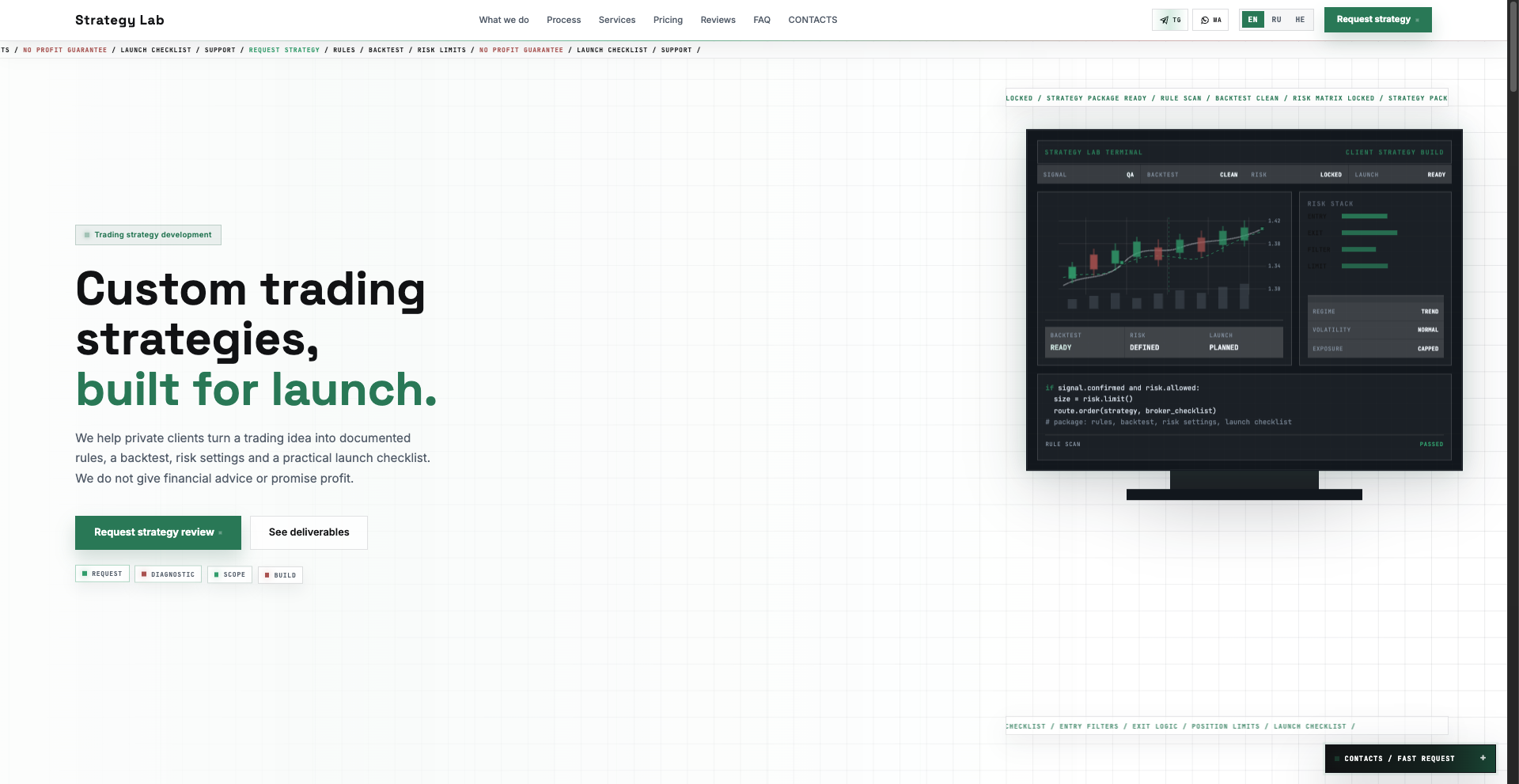
The idea is converted into rules, branches, sizing logic, tests, and blocked states.
The result can be reviewed by a client, developer, runner, or risk owner.
Scene 01
01 · visual logic
The whole strategy becomes a map.
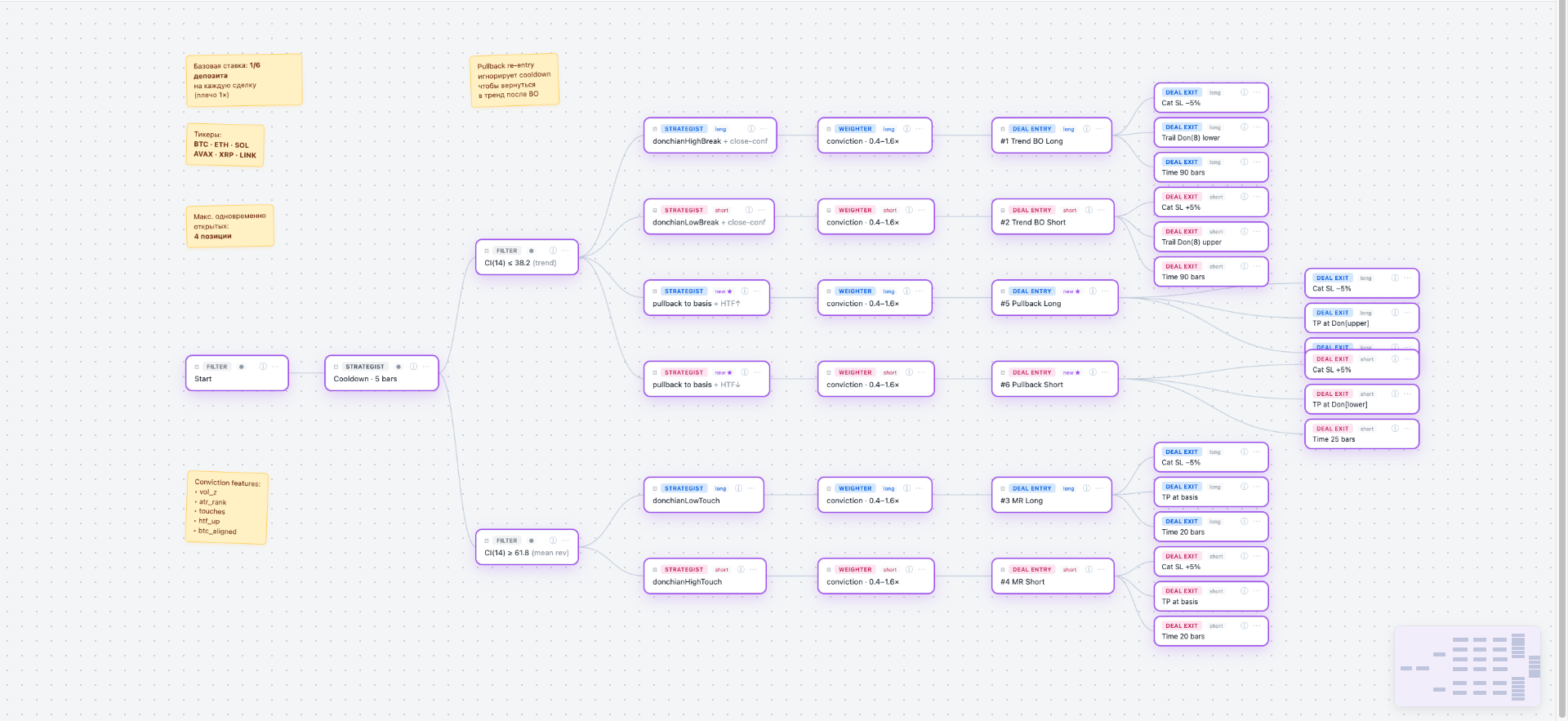
Branches, entries, exits, filters, sizing notes, and fallback paths are placed on one canvas. The point is simple: the client sees how the strategy thinks before anyone talks about execution.
What this solves
No more strategy hidden in a chat thread, screenshot, or half-remembered rule. Every decision path becomes visible.
Visible nowEvery branch has a place.
Review value
A client can point to a block and ask why that exact decision exists.
Map resolves
 Scenario branches
Sizing notes
Exit stack
One readable rule tree instead of scattered notes.
Scenario branches
Sizing notes
Exit stack
One readable rule tree instead of scattered notes.
Scene 02
02 · evidence
Backtest evidence replaces storytelling.
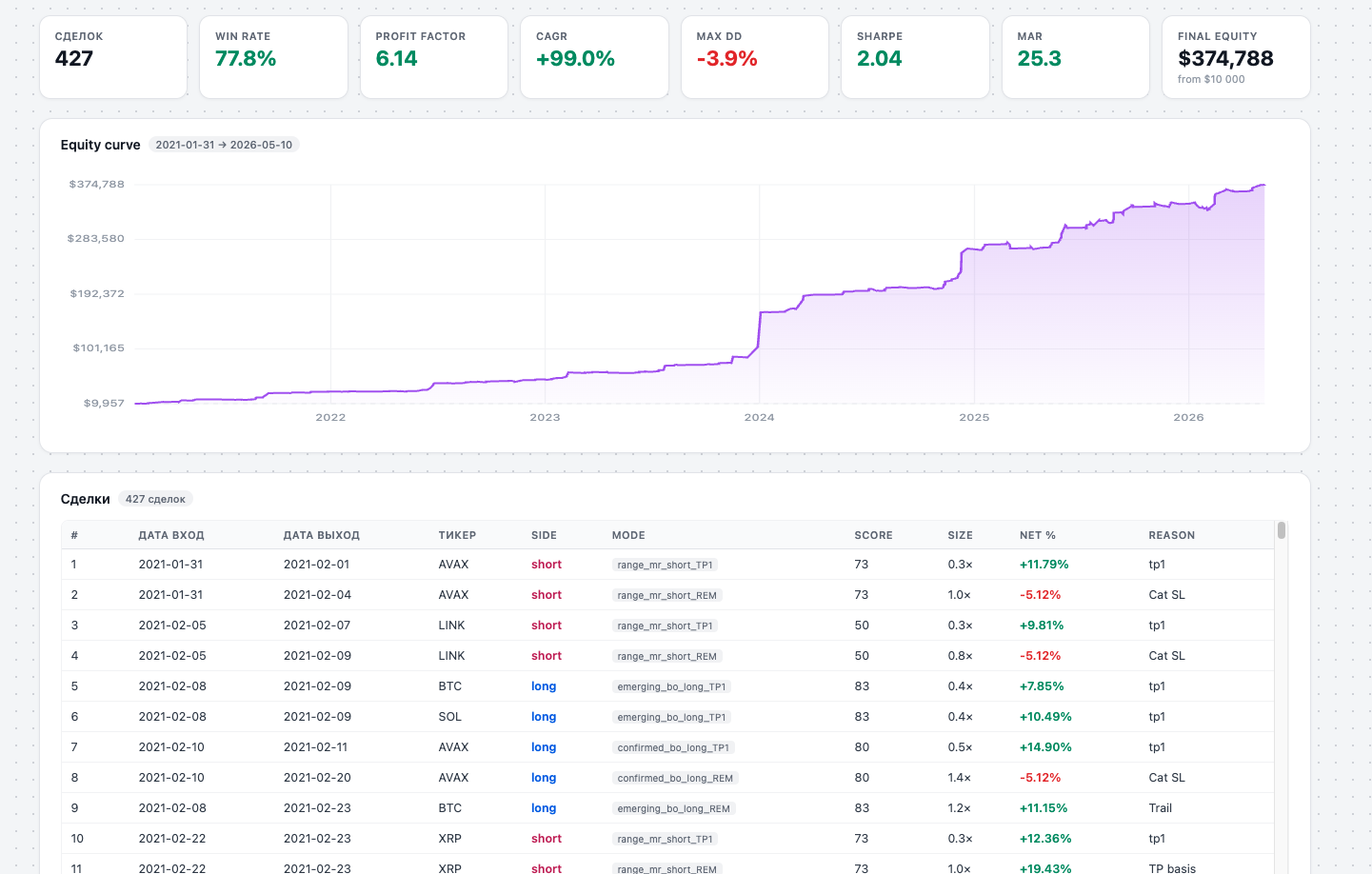
The tested result is packaged with metrics, equity curve, trade table, and drawdown context. Instead of a screenshot claim, the client receives a readable test surface.
What this proves
Performance is shown together with assumptions, trade count, drawdown, and the actual trade table so the result can be challenged.
427trades
77.8%win rate
2.04Sharpe
$374,788final equity
Attached evidenceCurve, trades, assumptions.
Anti-bullshit layer
The result is easier to audit because the equity curve and trade table sit together.
Backtest package
 Equity curve
Trade table
Metrics stay attached to the test that produced them.
Equity curve
Trade table
Metrics stay attached to the test that produced them.
Scene 03
03 · position logic
Position size is tied to context.
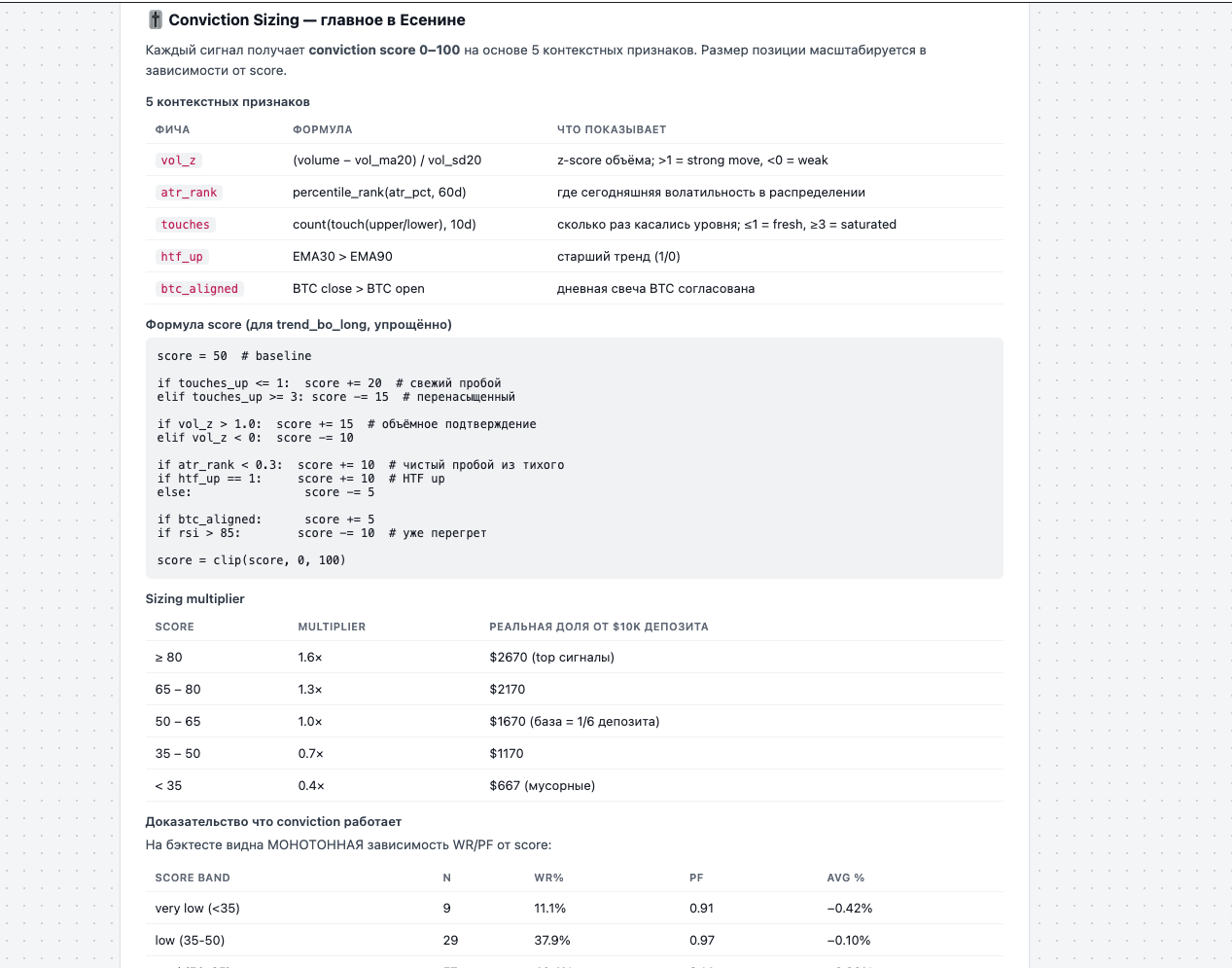
Conviction scoring shows how volume, volatility, touches, higher-timeframe alignment, and market context change sizing. It makes the strategy less like a black box and more like an inspectable operating rule.
What this controls
Weak setups can be reduced, strong setups can be sized higher, and blocked states can be written down before launch.
Decision ruleScore changes size.
Risk control
Weak context is reduced before it becomes a live execution problem.
Sizing logic
 Score → size
Context features
Sizing becomes a rule, not a feeling.
Score → size
Context features
Sizing becomes a rule, not a feeling.
Scene 04
04 · handoff
The strategy ends as a specification.
Base parameters, tickers, timeframe, exits, cooldown, fee assumptions, slippage, and launch constraints are written down. This is the handoff layer: the strategy can be discussed, rebuilt, tested, or implemented without losing the original logic.
What gets delivered
A structured package with rules, backtest, risk assumptions, and checklist so the next person knows exactly what is being reviewed.
HandoffRules survive the meeting.
Next step
The package can go to build, paper trading, or another round of research.
Ready for handoff
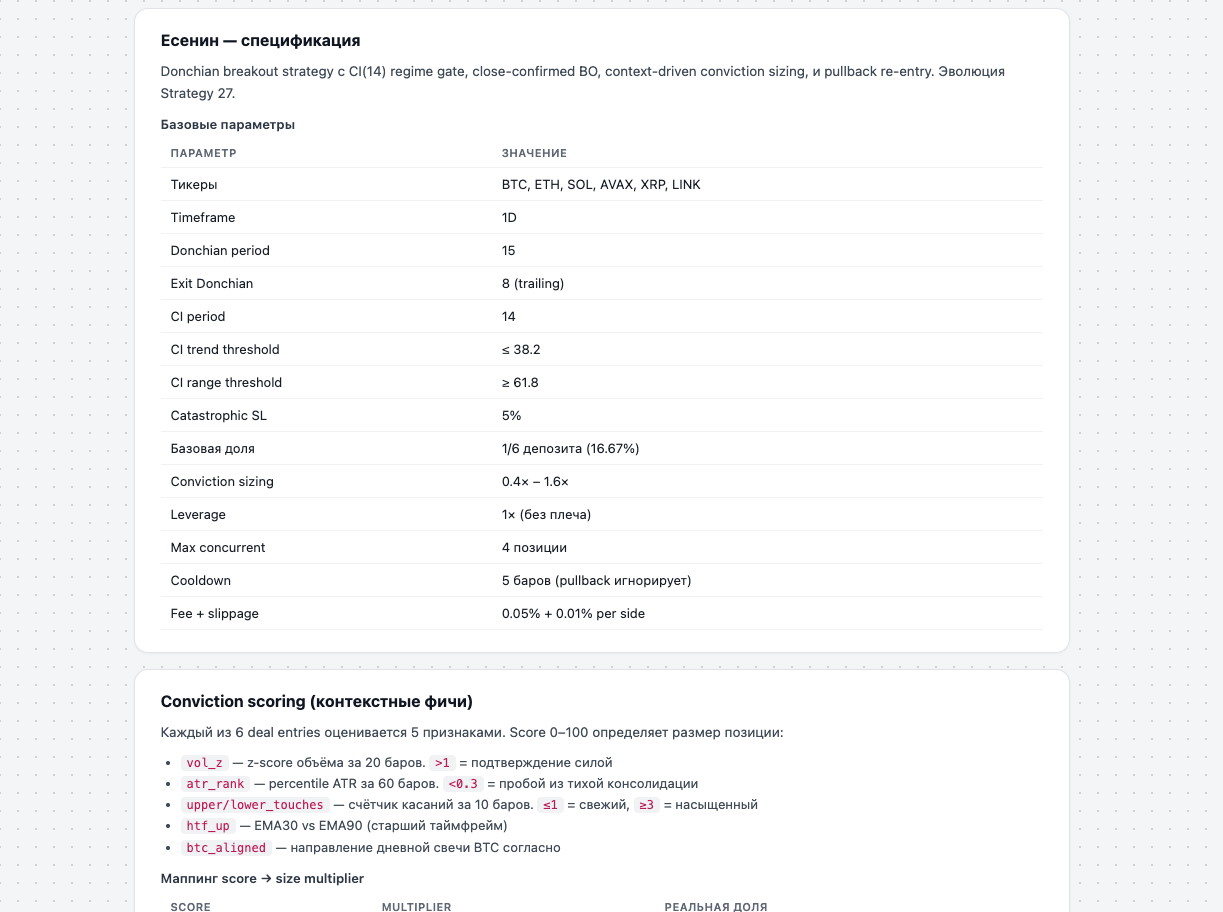 Base rules
Operational assumptions
Base rules
Operational assumptions
Client output
A serious strategy package, not a loose idea.
Every delivery is designed to answer the questions that usually kill launch quality: what exactly is the rule, what was tested, how much risk is allowed, and what blocks activation?
Entry, exit, filters, invalidation, and manual review conditions.
Metrics, equity curve, trades, and assumptions in one surface.
Exposure limits, sizing logic, drawdown context, and blocked states.
Checklist for what must be checked before any live discussion.